




Outdoor Workouts Are Back in Dubai: How to Train Smart as the Temperature Drops
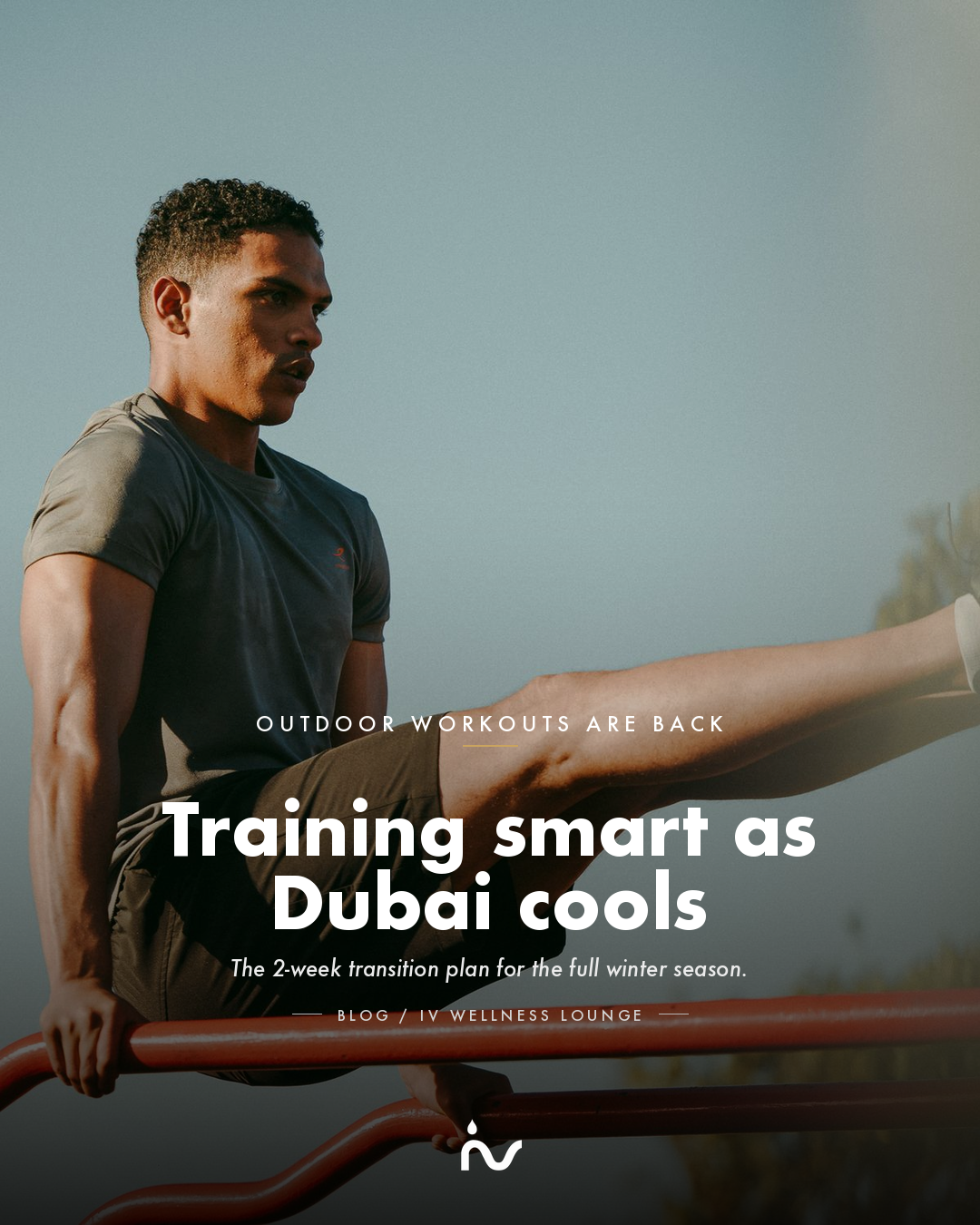
Dubai's genuine outdoor-training season just arrived. Temperatures dropped into the comfortable zone this week. Jumeirah Open Beach is busy again at sunrise. Al Qudra cycling tracks are seeing weekend traffic. The outdoor crowds that disappeared across summer are back, and the full outdoor fitness ecosystem reactivates right as Dubai Fitness Challenge 2026 approaches.
This guide covers how to transition back to outdoor training smartly, the hydration strategy specific to Dubai's climate, and how IV Therapy supports the body through the training ramp that follows an unavoidably sedentary summer.
Why the Transition Matters More Than You Think
Adults who spent summer limited to air-conditioned gyms (or no training at all) often jump straight into aggressive outdoor training the moment weather allows. This is a predictable path to injury or burnout within the first two weeks.
The body is adapted to the summer environment. Cardiovascular capacity is reduced. Muscles are detrained for the specific demands of outdoor movement. Hydration status is often compromised from months of air-conditioned living.
A smart two-week transition into outdoor training delivers meaningfully stronger results across the full winter season than a cold-start full-intensity push.
Week 1: The Gentle Return
The first week back outdoors should be moderate intensity, shorter duration, consistent frequency.
Running: start with 20 to 30 minute easy-pace runs three or four times across the week. Not longer. Not faster.
Cycling: 45 to 60 minute moderate-effort rides. Save the hard efforts for week 2 or 3.
Beach workouts and outdoor group fitness: start with one or two sessions this week. Monitor how your body responds before adding volume.
The goal of week 1 is adaptation, not performance. The body is relearning the specific demands of outdoor movement.
Week 2: Build the Volume
Second week introduces more volume while keeping intensity moderate.
Running: increase to 30 to 45 minute runs, four or five times across the week. One slightly longer run on the weekend if your base supports it.
Cycling: longer rides on weekends, specific intensity work mid-week.
Introduce specific terrain work. Hills, sand, trail runs. The variety builds the fitness that pure flat-road work alone cannot develop.
Monitor sleep quality. Harder training should not degrade sleep. If it is, back off.
Dubai-Specific Hydration Strategy
Even in cooler weather, Dubai's dry air and sun exposure make hydration meaningfully more demanding than most adults recognise.
Pre-training: 500 ml of water in the 60 minutes before any outdoor session. 750 ml if the session will be longer than 60 minutes.
During training: 150 to 250 ml every 20 minutes for sessions longer than 45 minutes. Add electrolytes for sessions longer than 60 minutes.
Post-training: aim to replace 150 percent of fluid losses within 2 hours post-session. For most sessions, 750 ml to 1 litre of water with electrolytes.
Daily baseline: 3 to 4 litres of water daily for active adults in Dubai. More if training volume is high.
Many adults underestimate daily hydration needs because the dry climate makes you less visibly sweaty than you actually are. Monitor urine color as a simple hydration proxy.
The IV Support That Fits the Training Ramp
The training ramp from summer-sedentary to full outdoor season places specific demands on the body that targeted IV support addresses well.
Fitness Hub: training-specific nutrients, electrolytes, amino acids. Ideal for the transition week and as monthly maintenance across the winter training season.
Recovery Hub: for the harder training weeks where recovery capacity needs direct support.
Energy Hub: for adults experiencing fatigue from the combined training ramp and normal life demands.
Immune Hub: seasonal transition is also virus-season transition. Immune support meaningfully reduces the risk of catching something that would interrupt the training block.
The 3-Session Special on the current Offers page supports a proper monthly rhythm. Alternatively, the IV Buy 1 Get 1 Free works well for pairing Fitness Hub + Recovery Hub across a two-week block.
Protecting Against Common Transition Injuries
The most common injuries in the summer-to-outdoor transition are entirely predictable and largely preventable.
Shin splints: from sudden increase in running volume on hard surfaces. Prevention: increase volume gradually, add soft-surface running (grass, trail), build calf and foot strength.
Achilles tendonitis: from calf tightness combined with increased running load. Prevention: consistent calf stretching, gradual volume progression.
Lower back strain: from heavy weekend cycling without proper core support. Prevention: core strength work alongside cycling, bike fit assessment if riding more than 10 hours per week.
Heat exhaustion in warm-day sessions: Dubai October still has warm days. Prevention: train early morning or evening, hydrate properly, listen to your body.
Overuse injuries from too-rapid progression: the fundamental cause of most transition-season injuries. Prevention: gradual progression, respect for the two-week transition window.
Where to Train Outdoors in Dubai
Running: Jumeirah Open Beach boardwalk, Kite Beach, Dubai Marina JBR, Al Qudra Lakes (for longer runs), Safa Park, Dubai Water Canal running track.
Cycling: Al Qudra Cycling Track (standard), Nad Al Sheba Cycle Path (quieter), Palm Jumeirah circuit for shorter rides.
Beach training: Kite Beach has outdoor fitness equipment and group classes. Jumeirah Open Beach is quieter.
Group fitness: outdoor group classes return in October across the city. Many adults find the group dynamic meaningfully improves consistency.
Pool training: outdoor pool season also starts now. For adults with joint concerns, outdoor swimming is an excellent lower-impact training mode.
Combining Outdoor Training With DFC 2026
DFC 2026 starts October 31. The outdoor transition that starts now sets up a strong DFC performance.
Adults who use the October outdoor transition to build their training baseline enter DFC with meaningful fitness already in place. This dramatically improves completion odds.
Adults who skip the transition and start outdoor training on day 1 of DFC often injure themselves within week 1 or burn out by week 3.
The outdoor training season and DFC align perfectly. Build the base now; let DFC consolidate it.
Nutrition Adjustments for the Training Ramp
Increased training load requires increased calorie intake. Adults undereating during the training ramp consistently report fatigue, poor recovery and progressive performance decline.
Carbohydrate: increase to match training volume. Harder training weeks require more carbs. Fear of carbs is one of the most common mistakes in the transition back to serious training.
Protein: 1.6 to 2.2 grams per kilogram of body weight daily. Non-negotiable for muscle repair and adaptation.
Fat: adequate but not excessive. Fat is important for hormone function but overeating fat crowds out the carbs you need for training fuel.
Micronutrients: this is where IV Therapy layers in meaningfully. Oral supplementation often does not deliver the micronutrient status that elevated training load demands.
Frequently Asked Questions
How quickly can I ramp up outdoor training after summer?
Two-week transition is the standard. Week 1 moderate, week 2 build volume, week 3 begin reaching full training load.
How much water should I drink training outdoors in Dubai?
3 to 4 litres daily baseline plus session-specific hydration. More if training volume is high.
Which IV drip is best for the training transition?
Fitness Hub as the primary training-support drip. Recovery Hub as a complement for harder weeks.
When is the best time of day to train outdoors in Dubai?
Early morning (6 to 8 am) is cooler and quieter. Evening (after 5 pm) is cooler but more crowded. Avoid midday for the first few weeks of the transition.
Can I combine outdoor training with DFC?
Yes. The outdoor season and DFC align well. The transition that starts now sets up a strong DFC performance.
Realistic Weekly Rhythm Across the Cool Season
The strongest outdoor training outcomes across Dubai's October-to-March season come from a consistent weekly rhythm rather than sporadic hard sessions.
Three to five training sessions per week delivers meaningful fitness progression. Fewer than three risks losing adaptation. More than five without proper recovery infrastructure risks injury.
Mix modalities. Pure running every day is harder on the body than running three days with cycling or swimming on alternate days.
Build in a true rest day each week. Not light cardio. Full rest. This is where adaptation happens.
Protect your sleep across the training block. The adults who sustain the full cool-season training rhythm are consistently the adults who protected 7 to 9 hours of sleep nightly.
Build the IV support into the monthly rhythm. One Fitness Hub plus one Recovery Hub per month maintains the training capacity across the full season at manageable cost.
Book Your Training Transition Consultation in Dubai
For a personalised outdoor training transition plan and IV protocol, book at IV Wellness Lounge at DIFC, Palm Jumeirah, or at your preferred location through the at-home IV service.